|
Getting your Trinity Audio player ready...
|
It was a surprise last Saturday morning when KTVU’s newscast had a live telephone report from Rome where the funeral mass celebrating Pope Francis had been held earlier in the day.
Long-time Bay Area meteorologist Roberta Gonzales, a resident of Pleasanton throughout her decades living here, reported from Rome. She is an active volunteer serving in a variety of roles at Catholic Community of Pleasanton including Eucharistic Minister and Hospital Minister.

Her traveling companion, Steve Farro serves as an usher and Eucharistic Minister at St. Michaels in Livermore before joining Roberta at St. Augustine’s,
She was in Rome for a vacation planned months before in conjunction with the Catholic Church’s Jubilee. A pilgrimage to Rome and entering the Holy Doors of the four basilicas in Rome is a classic way to observe the Jubilee. The doors only are open in Jubilee years.
Roberta told the KTVU news team that it was her fourth trip to Rome and the crowds honoring the late Pope made walking to reach the historical sites on her agenda more challenging. Earlier, she had visited Rome to run the marathon there. She run more than 20 marathons and three Iron (Wo)man events.
She appeared live on camera in a Friday segment where she described Rome as a Super Bowl times 1,000 because there are so many people there. Her apartment is about 1 ½ miles from St. Peter’s Basilica yet it took more than an hour to reach the plaza. Saturday she said she was wearing the same outfit because her luggage hadn’t caught up. It took three days.
She was struck by how kind and respectful the crowds were as people gathered to say a final goodbye to the pope. She said she was fortunate to pay her respects Thursday afternoon after waiting about 35 minutes—a huge difference from the 5-hour waits that were common. Friday was even a busier day because it was a Roman holiday and museum admission was free.
The state Legislature and the governor have thrown gobs of money and plenty of legislation at the state’s housing crisis. When Gov. Gavin Newsom took office in 2019, he proclaimed the state would build 350,000 homes over the next five years—fat chance. With local governments issuing around 100,000 permits per year, the governor quietly shifted his firm goal to an “aspiration.”
Meanwhile, legislative leaders are pushing, most notably Sen. Scott Wiener (D-San Francisco) and Assemblywoman Buffy Wicks (D-Oakland). Wiener has a bill moving forward that would allow transit agencies to build on their land at whatever densities they choose without having to clear the state environmental hurdles. He and the governor have pushed through other similar measures to lower barriers.
Sadly, they have not worked. The homeless population continued to soar despite millions spent. The state’s basic hammer is the 8-year cycle of housing requirements that force local governments to zone land for low and very-low income people. It amounts to a huge subsidy driving up the cost of market-rate housing.
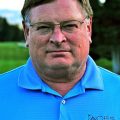
Retired Pleasanton land-use attorney Peter MacDonald, who holds both a master’s degree in urban planning and his law degree, served as city attorney when Pleasanton processed Hacienda Business Park and three other major business/retail developments plus thousands of housing units in the 1980s. He understands housing.

His solution—scrap the regional goals and turn it over to the market place to build units that are affordable by design—in other words—smaller. The average housing size has soared compared to the 1,100-1,200-square-foot units of the 1950s and 1960s. Affordability can achieved through smaller units.
Pete has written a book, “The Case Against Inclusionary Rent Controls…Insights from the California Housing Disaster.” It’s now available digitally on Amazon and the paperback will be released this month.
MacDonald cites a 2021 study that showed rents had to increase $192/month to cover the subsidy. MacDonald did his own study that showed for every $1 in subsidy, other buyers paid $13 more in costs.
Clearly, it doesn’t work financially or in creating housing. Back to the drawing board—Pete hopes to get his book into the hands of key Sacramento legislators so they might understand his real world wisdom.